Bahasa Indonesia
  English
Choosing the right contraceptive is a decision that affects two people, not just one. Every couple has different health conditions, lifestyles, and needs — which is exactly why there’s no single method that works for everyone. This article covers all the main options for female contraceptives and male contraceptives so you and your partner can make the most informed choice based on facts, not just what everyone else seems to be using.
Why Choosing the Right Contraceptive Actually Matters
It’s about more than just preventing pregnancy. The right contraceptive choice also affects hormonal health, day-to-day comfort, and the freedom to plan your family on your own terms.
Three Ways Contraceptives Work
All contraceptive methods work through one of three mechanisms. The first is preventing ovulation so there’s no egg to fertilise — this is how hormonal methods like the pill and injectable work. The second is creating a physical barrier between sperm and egg, which is how condoms function. The third is preventing a fertilised egg from implanting in the uterine wall, which is how the copper IUD works.
Understanding these mechanisms helps you identify which approach fits your health situation and preferences.
Short-Term vs Long-Term Contraception
Short-term methods like condoms and the pill offer high flexibility because they can be stopped at any time without a medical procedure. Long-term methods like IUDs and implants are more convenient for couples who don’t want to manage contraception daily or every time they have sex — and they’re extremely effective. Permanent options like tubal ligation and vasectomy are best suited to couples who are certain they don’t want more children.
Female Contraceptives: From a Daily Pill to a Decade of Protection
There are more than five contraceptive options available for women, and each one works quite differently. Here’s a practical overview.
1. The Contraceptive Pill
The pill contains progestogen, or a combination of progestogen and oestrogen, to prevent ovulation. When taken correctly at the same time every day, it’s more than 99% effective. The upsides include more regular periods and reduced cramping. The downside is that it requires strict daily consistency, and it doesn’t offer any protection against sexually transmitted infections (STIs).
2. Injectable Contraceptive (Birth Control Shot)
The injectable comes in one-month and three-month formulations. It’s more convenient than the pill since there’s nothing to remember daily. However, it can cause irregular periods as a side effect, and like the pill, it provides no protection against STIs.
3. Implant
A small hormonal rod inserted under the skin of the upper arm that works for three years. Its failure rate is less than 1%, making it one of the most effective reversible methods available. It’s a good fit for women who want medium-term protection without daily or monthly management.
4. IUD (Intrauterine Device)
An IUD is a small T-shaped device placed inside the uterus. There are two types. The copper IUD is hormone-free and can last up to ten years — a strong option for women who want to avoid additional hormones altogether. The hormonal IUD needs to be replaced every five years. Both are highly effective, but both require a medical professional for insertion.
5. Female Condom
The female condom is a soft plastic sheath inserted into the vagina before sex. Unlike every other female contraceptive method, it contains no hormones and can be inserted up to eight hours before sex, giving women greater control over their own protection. Its real-world effectiveness is around 79%, which is lower than hormonal methods, but it’s the only female contraceptive that also protects against STIs including HIV. The main drawbacks are the higher price point and limited availability compared to male condoms.
*Effectiveness figures in the table below refer to perfect use — correct and consistent use every time.
| Method | Duration | Effectiveness* | Hormonal | STI Protection |
| Contraceptive pill | Daily | >99% | Yes | No |
| Injectable (shot) | 1 or 3 months | >99% | Yes | No |
| Implant | 3 years | >99% | Yes | No |
| Copper IUD | Up to 10 years | >99% | No | No |
| Female condom | Single use | ~79% | No | Yes |
Also Read: Types of Condoms Women Love for Hotter Intimacy
Male Contraceptives: Time for Men to Step Up in Family Planning
Of all the contraceptive options out there, men have two: condoms and vasectomy. But only one of them is non-permanent and requires no medical procedure.
1. Vasectomy
A vasectomy is a minor surgical procedure that cuts or blocks the vas deferens, preventing sperm from being released during ejaculation. It’s highly effective and permanent, making it the right choice for men who are certain they don’t want more children. It’s not a suitable option for anyone looking for temporary contraception.
2. Male Condom
The condom is the only male contraceptive that is non-permanent, non-hormonal, available without a prescription, and requires no medical procedure. When used correctly and consistently, it’s 98% effective at preventing pregnancy (WHO, Planned Parenthood). Under typical real-world conditions, that figure is around 87%. Beyond pregnancy prevention, condoms are the only contraceptive method that also protects against sexually transmitted infections — including HIV, gonorrhoea, and chlamydia. No pill, IUD, implant, or injectable can do that.
*Effectiveness figures refer to perfect use.
| Method | Duration | Effectiveness* | Permanent | STI Protection |
| Vasectomy | Permanent | >99% | Yes | No |
| Male condom | Single use | 98% (perfect use) | No | Yes |
Also Read: How to Use a Condom to Prevent Leaks, Stay Comfortable & Safe!
Condoms: No Hormonal Side Effects — and the Only Method That Guards Against STIs Too
The pill, injectable, implant, and hormonal IUD all work by altering the hormonal balance in the body. Some cause irregular periods. Some affect blood pressure. Some aren’t suitable for women with certain medical conditions. Condoms don’t interfere with anyone’s hormones at all. There’s no hormonal impact on either partner.
For couples who are health-conscious and want to avoid long-term hormonal exposure, condoms are the most practical contraceptive option — and they’re the only one that provides dual protection against both pregnancy and STIs.
One thing worth keeping in mind: no contraceptive method is 100% effective, and condoms are no exception. Their effectiveness depends heavily on how consistently and correctly they’re used. The more carefully they’re used every time, the more reliable the protection.
Also Read: HIV Symptoms You Need to Know and How to Prevent Them
VIVO Condom Recommendations: Find the Right One for You
Not all condoms are the same. Choosing one that genuinely suits your needs and your partner’s preferences is part of what makes them effective — and enjoyable.
By Material
Latex is the most common material: flexible, widely available, and affordable. If you or your partner has a latex sensitivity or allergy, polyurethane is the answer. It’s thinner, odourless, and free from the latex proteins that trigger reactions. VIVO 0.01 is one of the thinnest polyurethane condoms available in Indonesia.
By Thickness and Sensation
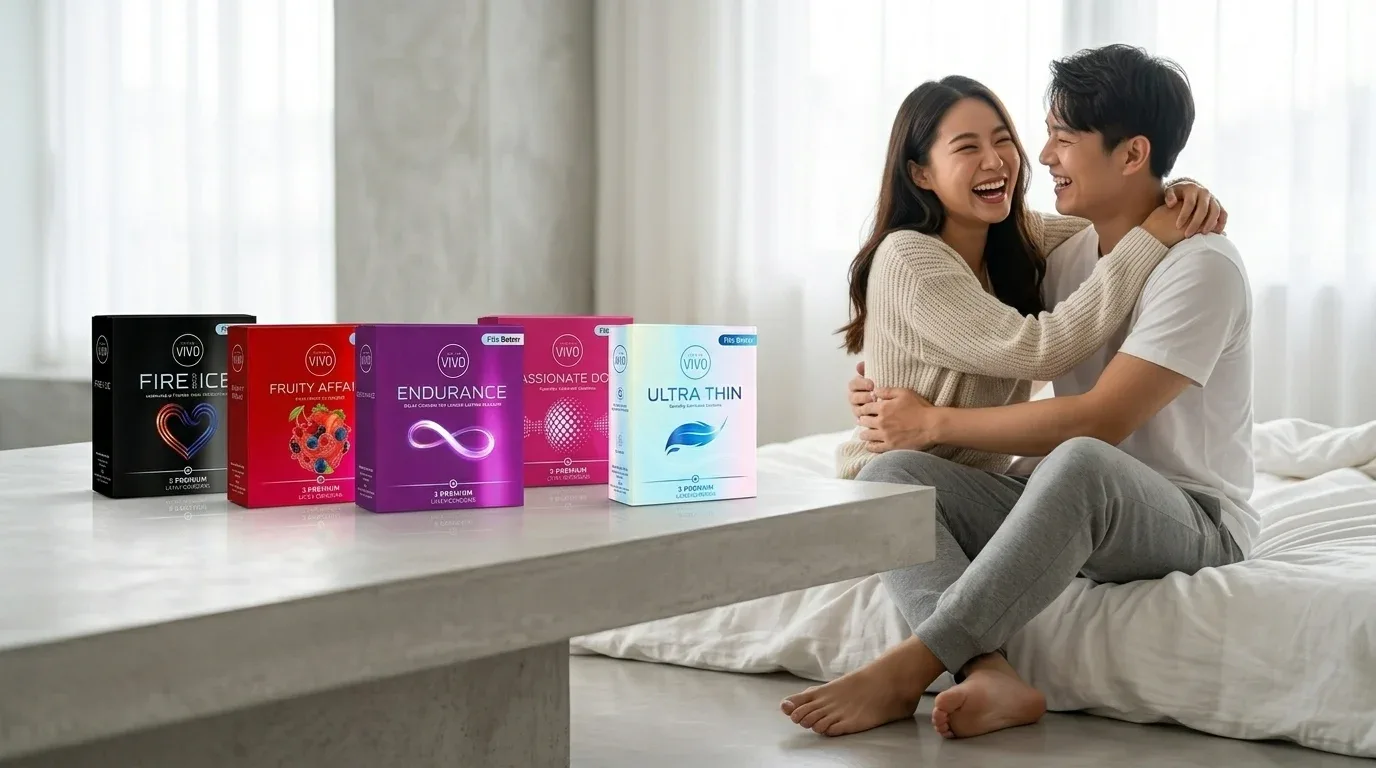
For a more natural feel, VIVO 0.03 and VIVO Ultra Thin deliver an ultra-thin experience without compromising on safety. Want extra stimulation? VIVO Passionate Dots adds texture for enhanced sensation. And if you’re after something genuinely different, VIVO Fire & Ice delivers both warming and cooling sensations simultaneously.
By Size
Fit is part of effectiveness, not just comfort. A condom that’s too loose risks slipping; one that’s too tight increases the chance of tearing. VIVO products are designed with a nominal width of 53 mm, calibrated for a comfortable fit for Asian men.
Find What Works Best for You and Your Partner
There’s no single contraceptive method that’s perfect for everyone — and that’s completely fine. What matters is finding the option that fits your health, your lifestyle, and what feels right for both of you.
If a condom is your choice, make sure you’re choosing one that genuinely fits — in terms of material, size, and the kind of experience you want. VIVO offers a wide range of condoms that have all passed international electronic testing standards, so every moment together can be fully enjoyed with confidence.