Bahasa Indonesia
  English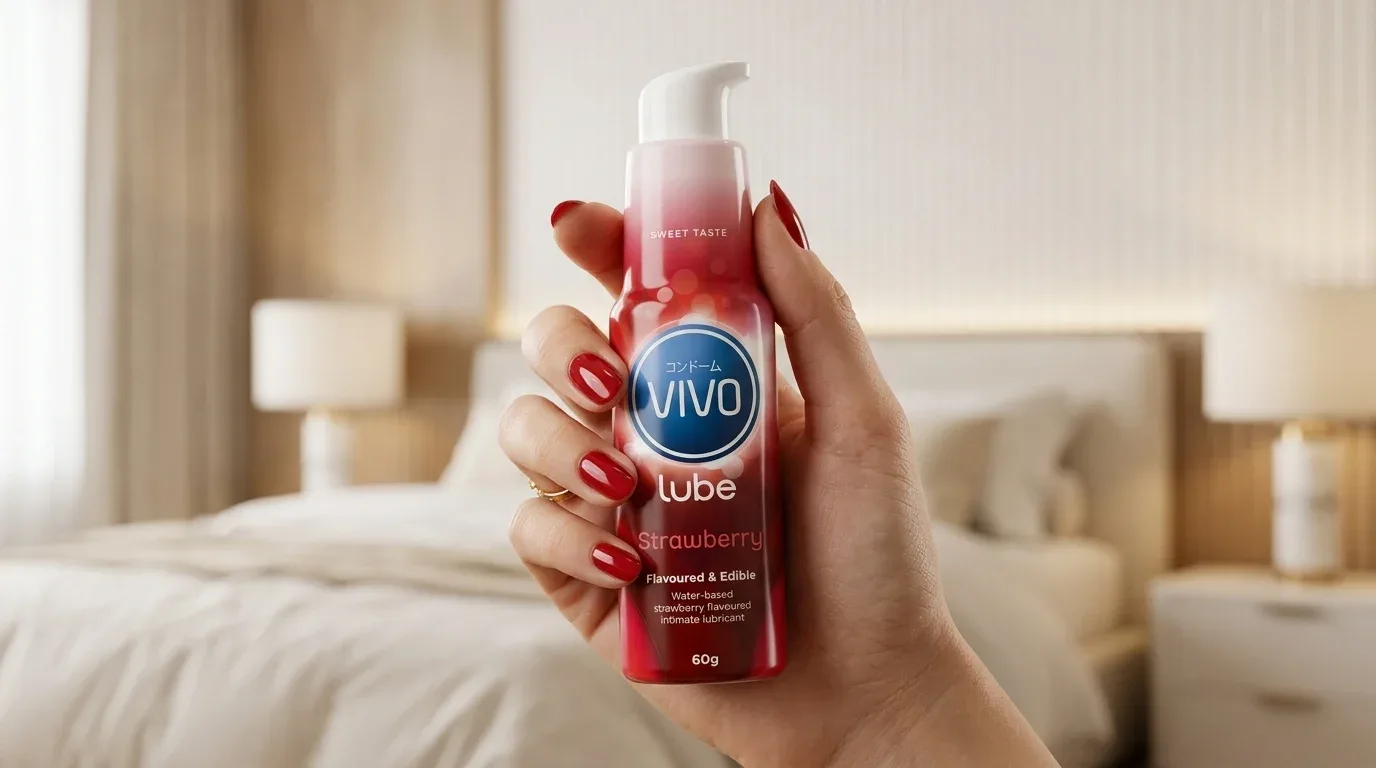
A lot of people still think lubricant for sex is only necessary when dealing with vaginal dryness or low arousal. In reality, lube can make intimacy noticeably more comfortable and enjoyable, even for couples with no issues at all. Excess friction can happen to anyone, and it often leaves a lingering discomfort that’s easy to overlook.
This article covers the different types of lubricant for sex, from what they do and how they differ to how to choose the right one for your needs. You’ll also learn the correct way to use lube, which types are safe with condoms, and a few VIVO products worth trying.
The Benefits of Lubricant During Sex
Plenty of people assume that discomfort after sex is just something to expect. In reality, one of the most common causes is excess friction during penetration, which can lead to tiny micro-tears in delicate tissue. This is exactly where lubricant makes a real difference. It reduces friction, which means sex feels more comfortable, less likely to sting afterward, and easier to enjoy for longer.
The benefits go beyond that too. Lube also makes it easier to try out different positions comfortably. If you and your partner use condoms, applying a water-based lubricant to the outside of the condom helps reduce excess friction as well. This lets the condom do its job more effectively and lowers the chance of it tearing from too much dryness.
When Is Lubricant for Sex Most Useful?
There are a few situations where lubricant for sex tends to help the most. This includes shorter-than-usual foreplay, high stress levels that lower arousal, hormonal contraceptives that affect natural lubrication, or hormonal changes after childbirth or during menopause that reduce vaginal moisture.
That said, lube isn’t limited to these situations. Plenty of couples simply use it as part of their regular routine to make intimacy feel more comfortable and enjoyable.
Types of Lubricant for Sex and Which One Is Safest
Before picking a product, it helps to understand the different types of lubricant for sex available. Each one has its own characteristics, and not every type is suitable for every situation, especially if you’re using condoms.
Water-Based Lubricant: The Safest, Most Versatile Choice
If you’re not sure where to start, water-based lubricant is the safest option by far. This type of lubricant for sex works with every kind of condom, including latex and polyurethane, doesn’t leave stains, washes off easily, and helps maintain the vagina’s natural pH balance.
It’s no surprise that water-based lube is the type most often recommended by healthcare professionals. Its formula is specifically designed for sensitive, intimate areas.
Also Read: 4 Water-Based Lubes for Maximum Pleasure!
Oil-Based Lubricant: Avoid Pairing It With Condoms
Many people still don’t realise that oil-based lubricant can actually reduce a condom’s effectiveness. A study published in the journal Contraception (1989) found that mineral oil can dramatically weaken latex condoms in as little as one minute. This is exactly why guidance from the CDC and WHO advises against using oil-based lubricants with latex condoms.
The reasoning is fairly straightforward. Oil interacts chemically with the latex, weakening its structure and making it far more prone to tearing without any obvious warning sign. That means coconut oil, olive oil, baby oil, and other oil-based products shouldn’t be used as a lubricant for sex if you’re relying on a latex condom for protection.
Silicone-Based Lubricant: Long-Lasting Performance
Silicone-based lubricant has a noticeably longer-lasting texture than water-based options, so it doesn’t dry out as quickly even during extended sessions. It also holds up well around water, which makes it a good fit for couples wanting to switch things up in the shower, a bathtub, or even a pool.
Is There a Truly Safe Natural Lubricant for Sex?
Plenty of people reach for natural ingredients simply because they’re already at home. But not everything commonly used around the house is actually safe as a natural lubricant for sex. Some options are reasonably safe, while others can genuinely put intimate health at risk.
Pure Aloe Vera Gel: A Reasonably Safe Natural Option
Aloe vera gel is one of the more reasonably safe natural options for use as a temporary lubricant. It’s water-based, its pH is compatible with the vagina, and it won’t damage a condom.
One important distinction worth making here: this doesn’t mean gel scraped straight from the plant. Fresh gel taken directly from an aloe vera leaf hasn’t gone through any safety testing and may contain contaminants. A safer route is a packaged aloe vera gel product formulated specifically for skin use, with a composition of 100% pure aloe vera and no added alcohol, fragrance, or dye. Before applying it to an intimate area, patch test a small amount on another part of skin, like the inside of your elbow, to rule out any allergic reaction.
Oil-Based Ingredients: Best Avoided
Despite often being suggested as an alternative lubricant for sex, ingredients like coconut oil, olive oil, baby oil, butter, and ghee aren’t recommended, particularly if you’re using a latex condom. The oil content can break down the condom material and significantly increase the risk of tearing.
Beyond that, regularly using oil-based ingredients can also disrupt the vagina’s natural flora and pH balance. Saliva should be avoided as a lubricant too, since it carries bacteria that can raise the risk of infection.
Purpose-Made Lubricant vs Natural Ingredients: Which Is Actually Safer?
When it comes down to safety and comfort, a purpose-formulated lubricant for sex remains the better choice. These products are typically designed with a pH suited to intimate areas, dermatologically tested, and made with a consistent formula you can rely on.
Natural ingredients and kitchen staples, on the other hand, were never designed for sensitive areas and don’t necessarily meet the same safety standards. Being natural doesn’t automatically make something safer to use during sex.
Also Read: Best Vibrating Cock Ring: How to Use It, What It Does, and VIVO Recommendations
How to Use Lubricant for Sex the Right Way
Using lubricant correctly can make intimacy feel noticeably more comfortable and helps cut down on excess friction.
Apply lubricant for sex once foreplay has already started, then use a moderate amount on the intimate area or on the outside of a condom that’s already in place. Avoid overdoing it, since too much can actually make things feel less natural.
If you notice itching, stinging, a burning sensation, or redness after use, stop right away. Look for a gentler formula with minimal additives, particularly avoiding alcohol, fragrance, or high concentrations of glycerin if your skin tends to be sensitive.
VIVO Lubricant Recommendations: Pick One That Fits Your Needs
VIVO’s pelumas range covers a few different needs, all designed to keep things comfortable and safe.
1. VIVO H2O Lube: Simple and Comfortable for Everyday Use
VIVO H2O Lube comes in an unscented, flavourless formula, ideal if you prefer a natural feel. It’s water-based, never sticky or oily, fragrance-free, and safe to use alongside a condom.
2. VIVO Aloe Vera Lube: Moisturising With a Soothing Sensation
VIVO Aloe Vera Lube is infused with aloe vera extract for a moisturising, refreshing feel. It delivers a comfortable sensation during use, is safe with condoms, and is formulated to avoid irritation. It also doubles nicely as a massage gel.
3. VIVO Strawberry & Bubble Gum Lube: For a More Playful Mood
Looking to switch things up a little? VIVO Strawberry Lube and VIVO Bubble Gum Lube bring a fun, flavoured twist without compromising on safety. Both are water-based, condom-friendly, and a nice way to add some variety to foreplay.
4. VIVO Uranus Lube: Longer-Lasting Lubrication
VIVO Uranus Lube is a silicone-based lubricant built for longer-lasting lubrication. Its formula holds up well even around water, making it a solid choice for the shower, a bathtub, or a pool. It’s safe to use with condoms and formulated to avoid irritation.
FAQ: Common Questions About Lubricant for Sex
What’s the safest lubricant for sex?
Water-based lubricant is the safest option overall. It works with every type of condom, washes off easily, and helps maintain a healthy pH balance in intimate areas.
Is it safe to use lubricant for sex regularly?
Yes, as long as you’re using a lubricant for sex that’s specifically formulated for intimate use and water-based. Choose an alcohol-free product to keep things comfortable over time.
How do you know if a lubricant doesn’t agree with your skin?
If you notice itching, stinging, a burning sensation, or redness after use, stop using it and try a gentler formula instead. If the irritation doesn’t improve, it’s worth checking in with a healthcare professional.
Is flavoured or scented lubricant safe to use?
Yes, as long as it’s formulated specifically for intimate use. Every VIVO lube, including the flavoured varieties, is alcohol-free and designed not to cause irritation.
Ready to Make Things Feel Better? Start With the Right Lube
Choosing the right lubricant for sex can make intimacy feel noticeably more comfortable, cut down on friction, and genuinely improve things between you and your partner.
Whatever you’re looking for, VIVO has a range of condom-safe lubricants to choose from, from a classic unscented formula to aloe vera and playful flavoured options. Check out the full range of lubricant for sex from VIVO and find the one that suits you best.